Grammatically Perfect, Socially Frosty: The American Politeness Code Your Textbook Skipped

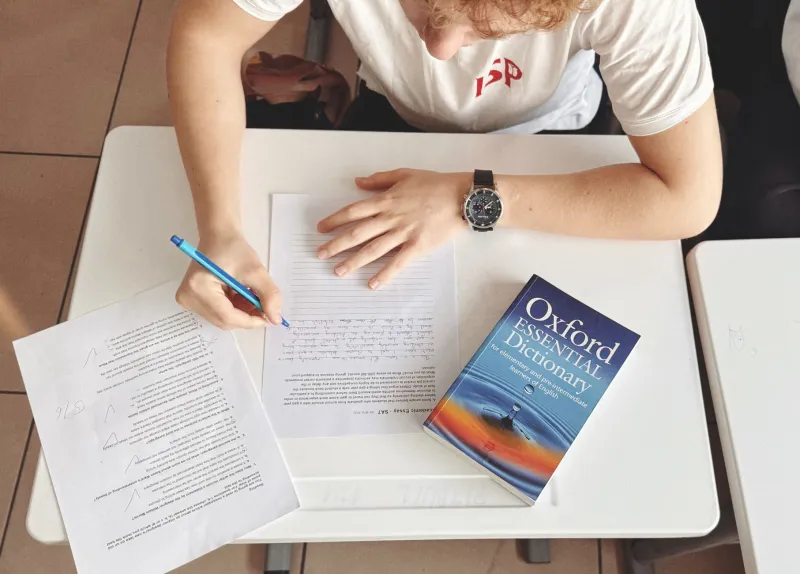
Photo: tranmautritam (tranmautritam.com / unsplash.com/@tranmautritam), CC0, via Wikimedia Commons
You spent twenty minutes on that email. The grammar is airtight. The subject-verb agreement is flawless. Every comma sits exactly where the style guide says it should.
And your colleague in Chicago still read it as a little cold.
Welcome to one of the most frustrating plateaus in English learning: being correct and still landing wrong. American English runs on a layer of softeners, hedges, and indirect requests that almost never appear in grammar books, because they are not grammar rules at all. They are social ones. Nobody grades you on them. Everybody notices when they are missing.
Why “correct” can sound like “demanding”
English has an imperative mood, and learners are often taught to use it confidently: Send me the file. Call me tomorrow. Fix this. Grammatically, that is unimpeachable. Socially, in a US workplace, an unmodified imperative from someone without clear authority reads as an order — and Americans tend to reserve that register for genuine urgency or for people they manage.
The fix is not to write longer sentences or to sprinkle “please” like salt. It is to understand that American politeness usually lives in three places: modal verbs, hedges, and framing. Each one gives the listener room to say no without either of you losing face, which is the whole point.
The modal switch: your fastest upgrade
Modals do the heavy lifting in polite American English because they shift a statement from fact to possibility.
- I need your feedback → I could use your feedback on this
- Send me the draft → Could you send me the draft?
- Do this by Thursday → Would it work to have this by Thursday?
- You made a mistake here → I think there might be an issue here
Notice that could, would, and might do not make you vaguer about the content — they make you softer about the delivery. The deadline is still Thursday. The draft is still needed. Nothing is lost.
A related move that trips up a lot of learners: past tense as distance. I was wondering if you had a minute is not about the past. It is a polite way of backing away from a demand. Same with I wanted to ask you about… — perfectly normal, perfectly American.
Hedges: the words that buy everyone an exit
Hedges are small phrases that lower the temperature. Used sparingly, they read as considerate. Used constantly, they read as unsure — more on that in a second.
- I might be wrong, but… (before a correction)
- Just — as in just checking in or just a quick question
- A quick — as in do you have a quick second?
- At your convenience (replaces as soon as possible in most non-emergencies)
- If that works for you (after proposing a time or plan)
- No rush (signals you respect their queue, even if there is a rush)
One warning about just: it is a genuine American habit, but stacking three of them — just wanted to quickly ask a small question — starts to sound apologetic. One softener per sentence is usually the ceiling.
Before and after: three situations you will actually hit
Requesting something from a coworker. Before: Please send me the updated budget. I need it today. After: Could you send over the updated budget when you get a chance? I could use it by end of day if that’s doable.
Disagreeing in a meeting. Before: That is not correct. After: I see it a little differently — can I walk you through what I’m seeing?
Following up on silence. Before: Did you get my email? Please respond. After: Just floating this back to the top of your inbox — happy to resend if it got buried.
The after versions are not weaker. In a US office, they are often more effective, because they keep the other person cooperative instead of defensive.
The casual-conversation version
This is not just an email thing. In speech, American friendliness has its own grammar. How are you? is a greeting, not a medical inquiry — the expected answer is Good, you? and then you move on. A flat Fine can sound like something is wrong. Small talk about weather, traffic, or the weekend is not filler; it is the on-ramp to the actual conversation, and skipping it can read as impatient.
Softening also shows up in refusals. No by itself is rare. Americans usually pad it: I wish I could, but I’m slammed this week. That sounds great, but I’ll have to pass. Learn two or three of those frames and you will stop accidentally offending people with a completely honest two-letter word.
A note on over-softening
There is a real cost to hedging too much. In American professional culture, someone who writes I just wanted to maybe suggest, if it’s not too much trouble, that we possibly consider… sounds uncertain, and uncertainty gets ignored. Politeness is a seasoning, not the meal. The reliable formula is: soft request, clear content. Be gentle about how you ask and completely unambiguous about what you need.
Regional and workplace variation matters too. A startup Slack channel is looser than a law firm’s client correspondence. When in doubt, mirror the person you are writing to — match their degree of formality rather than outdoing it.
Bring it to the forum
Try these in the comments thread this week:
- The rewrite challenge. Post the bluntest email you have sent recently. The group rewrites it three ways: polite, neutral, and formal.
- Softener audit. Paste a paragraph of your own writing and count your hedges. Too few? Too many?
- Role-play pair-up. One person plays a manager asking for a late change, the other plays a colleague who has to decline. Do it twice: once direct, once softened. Notice which feels harder to argue with.
- Regional check. If you work with Americans in different regions or industries, share a phrase that landed well and one that landed oddly. Patterns will emerge fast.
Grammar gets you understood. Tone gets you heard. The good news is that the tone layer is small — maybe a dozen phrases and two modals — and once you have it, it applies almost everywhere.